AIRLab Hassen Robotics · Mechanisms · Kinematics · Quantum · ML

Research

Geometry, mechanism intelligence, and emerging computation for robotics.

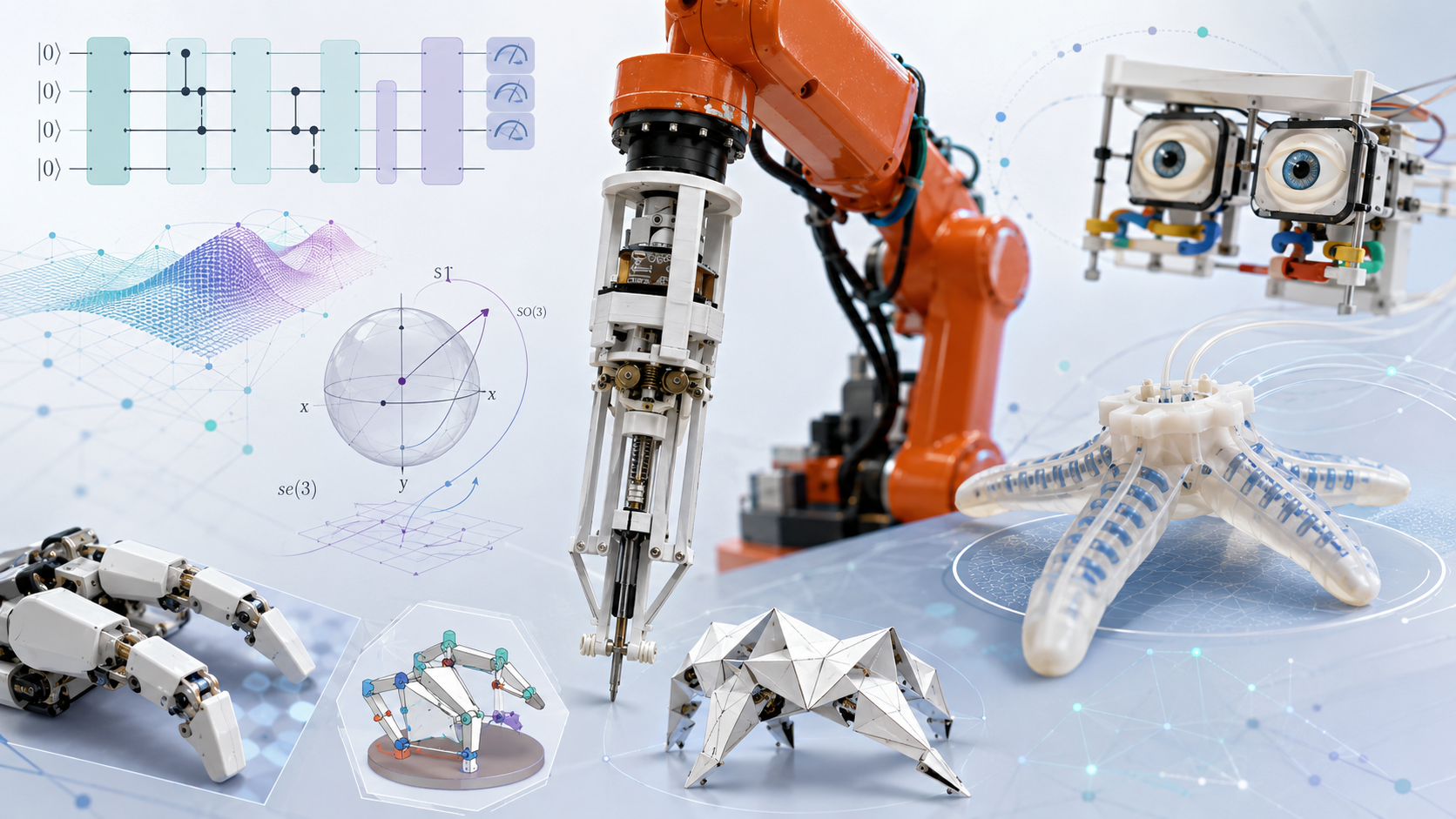
My research investigates how robotic systems can be understood analytically, designed systematically, optimized intelligently, and ultimately made more capable through data-driven and emerging computational methods. The work spans mathematical mechanism theory, screw-theoretic kinematics, Lie groups and Lie algebra, parallel and reconfigurable robots, origami and compliant mechanisms, intelligent manipulation, physics-informed learning, reinforcement learning, industrial automation, and quantum computing for robotics.

Screw Theory Lie Groups & Lie Algebra Parallel Manipulators Mechanism Synthesis Origami Robotics Intelligent Manipulation Physics-Informed Learning Reinforcement Learning Quantum Robotics

Research philosophy

Structure first. Intelligence second.

A robot should not be treated only as a collection of motors and sensors. Its geometry determines its allowable motion. Its constraints determine its force transmission. Its architecture determines its singularities, workspace and stiffness. Its controller determines how these capabilities are exploited. And its data-driven intelligence determines how well it can adapt when analytical models are incomplete.

My research therefore progresses from mechanism geometry to analytical modeling , then to optimization and intelligent control , and finally toward physics-informed and quantum-enhanced methods .

Geometry Kinematics Constraints Optimization Intelligence

Core research pillars

Three interconnected directions

1

Mathematical Robotics & Mechanism Science

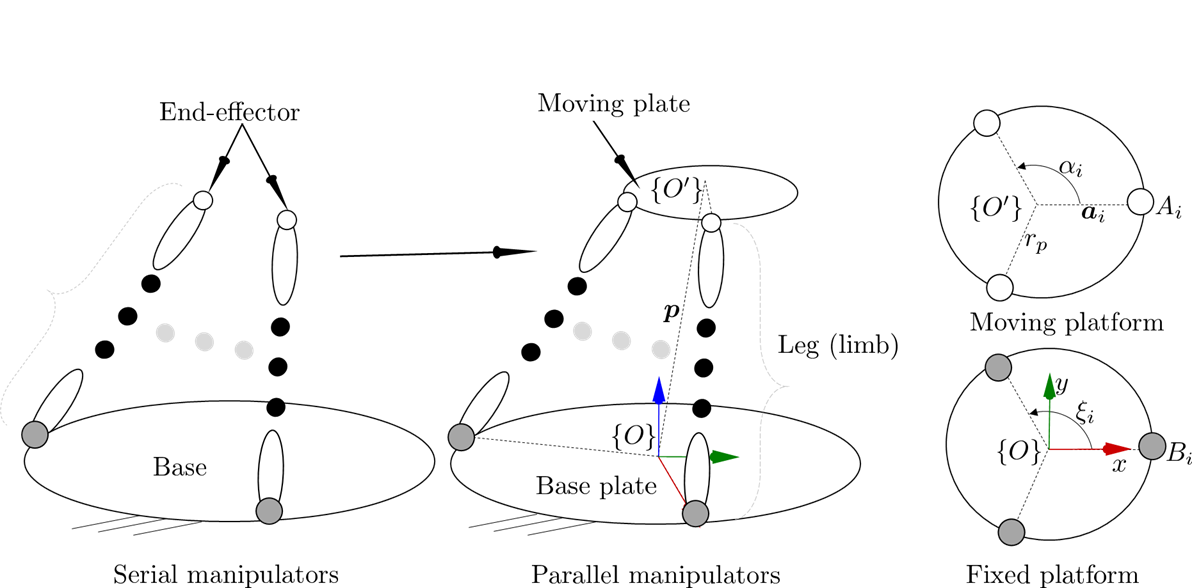
Geometry-first analysis and design of robotic mechanisms using screw theory, Lie theory, constraint spaces, Jacobian methods and mechanism synthesis.

  • Screw systems and reciprocal screws
  • Lie groups \(SO(3)\) and \(SE(3)\)
  • Lie algebras \(so(3)\) and \(se(3)\)
  • Parallel robot synthesis
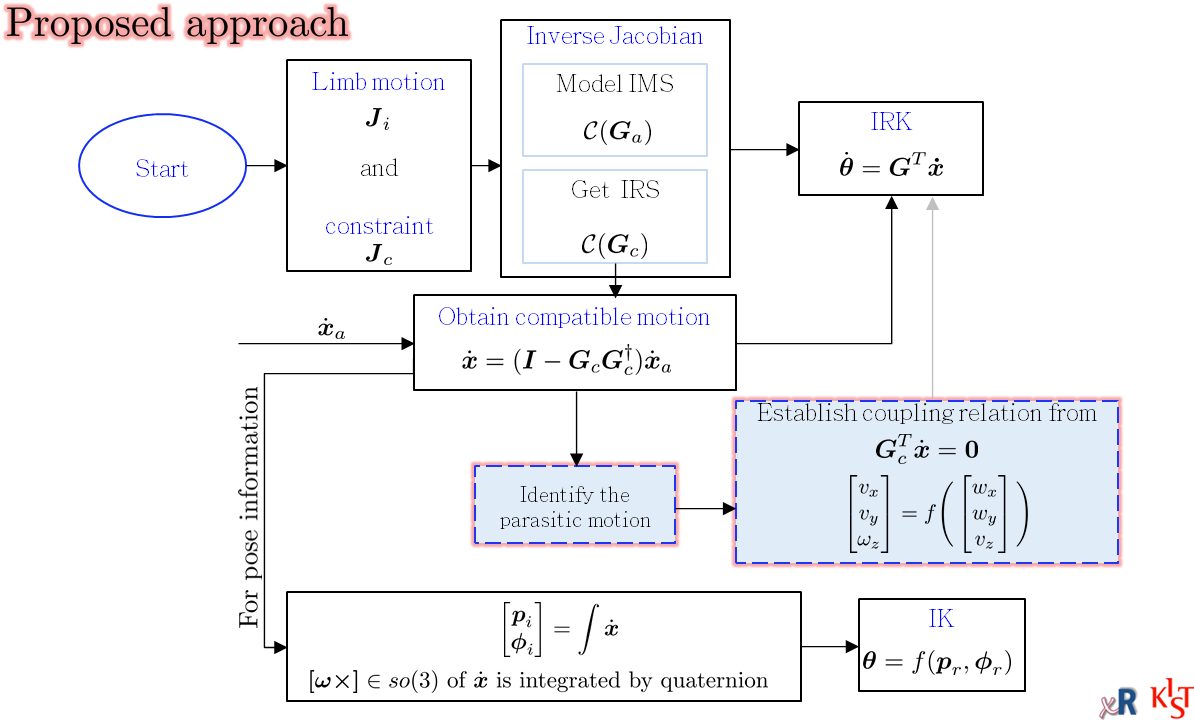
  • Parasitic-motion analysis
  • Workspace and dexterity optimization
2

Physics-Guided & Data-Driven Robotics

Hybrid robotic intelligence combining analytical structure with neural networks, reinforcement learning and learned corrections.

  • Physics-informed learning
  • Deep neural kinematic correction
  • Reinforcement learning
  • Bayesian estimation
  • Constraint-aware learning
  • Hybrid analytical / learned control
3

Quantum Computing for Robotics

Investigation of hybrid and quantum-native algorithms for expensive robotic search, optimization and machine-learning problems.

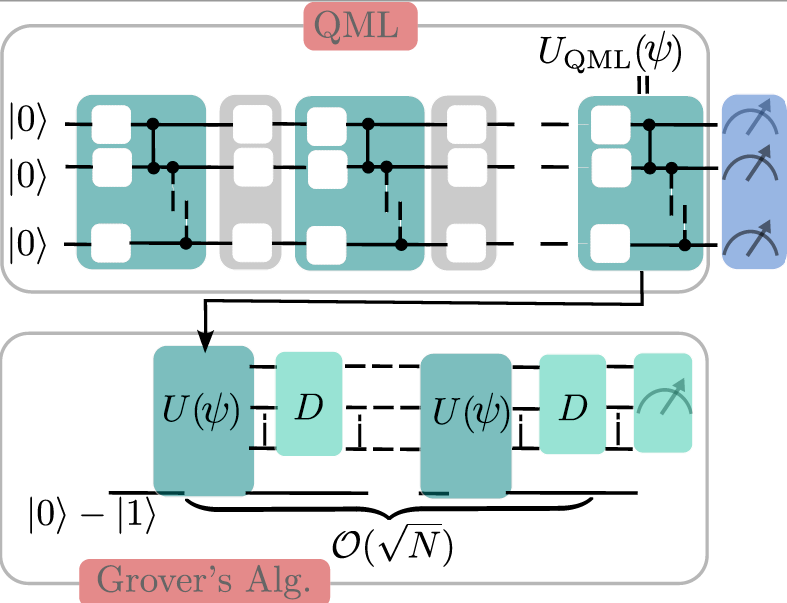
  • Quantum machine learning
  • Variational quantum circuits
  • Grover search
  • Kinematic optimization
  • Quantum reinforcement learning
  • Quantum planning and multi-robot systems

Research architecture

From physical structure to intelligent computation

AIRLab research architecture Diagram showing mechanism geometry, screw and Lie theory, optimization, learning, and quantum computation forming an integrated robotics research pipeline. Integrated Research Framework Mechanism geometry provides structure; learning and advanced computation extend capability. Mechanism Geometry links · joints · topology Screw & Lie Theory twists · constraints · groups Modeling & Optimization workspace · Jacobian · design Physics-Guided AI DNN · RL · estimation · control Quantum Robotics QML · Grover · optimization ROBOT
Research framework connecting mechanism architecture, geometric modeling, optimization, learning and quantum computation.

Research domains

Specific technical areas

ST

Screw Theory

Twist and wrench spaces, reciprocal screws, Plücker coordinates, constraint analysis and screw-based performance modeling.

LG

Lie Groups & Lie Algebra

\(SO(3)\), \(SE(3)\), subgroup structure, Lie-algebraic synthesis and geometric classification of robot motions.

PM

Parallel Manipulators

Lower-DoF PKMs, parasitic motion, singularity analysis, kinematic optimization and architecture synthesis.

RG

Reconfigurable Mechanisms

Mechanisms whose mobility, topology or functional behavior changes through configuration.

OR

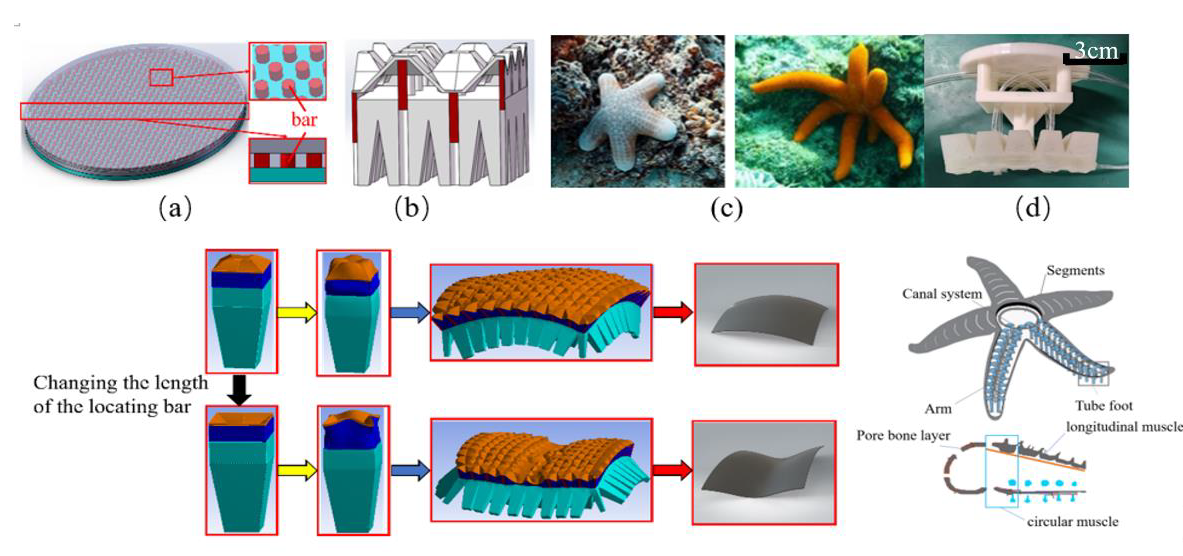
Origami & Morphing Robots

Foldable structures, thickness accommodation, multiple locomotion, kinematically decoupled origami mechanisms and morphing surfaces.

CR

Continuum Robotics

Continuously deformable mechanisms, continuum parallel structures, simulation, kinematics and medical-robotics applications.

IM

Intelligent Manipulation

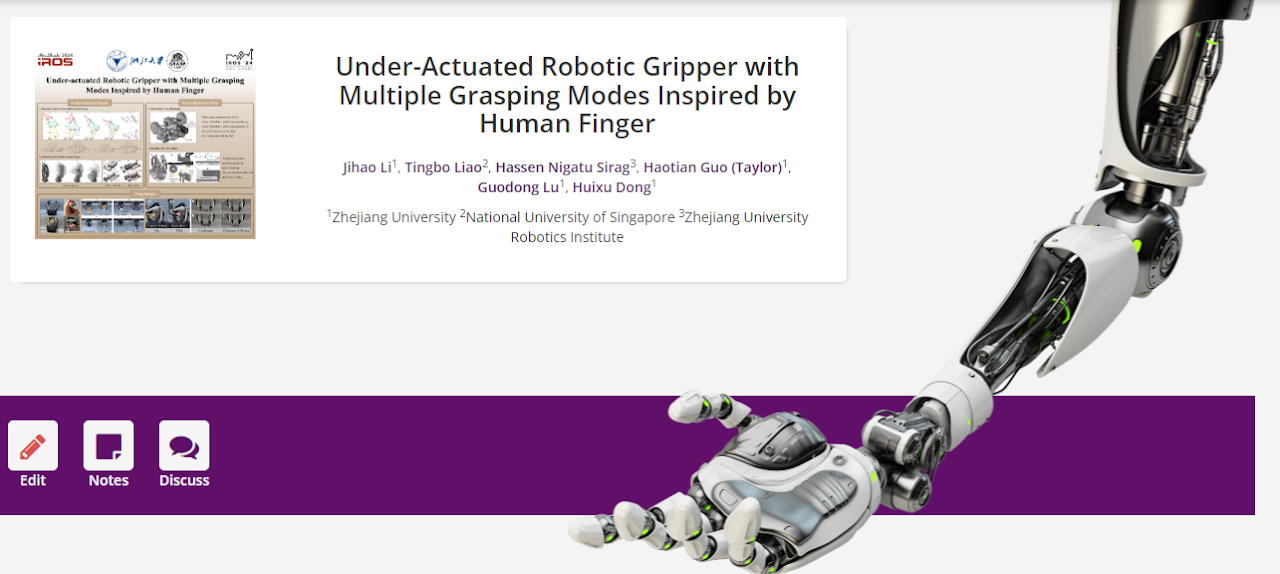
Underactuated hands, adaptive grasping, Fin-Ray-inspired gripping, robotic assembly and contact-rich manipulation.

AI

Robot Learning

Reinforcement learning, deep neural models, hybrid model-based learning, physics-guided intelligence and Bayesian estimation.

QR

Quantum Robotics

Quantum machine learning, variational circuits, Grover search, quantum optimization, quantum RL and future robotic applications.

Analytical foundation

Mathematical tools used across the research

Rigid-body motion

\[ T = \begin{bmatrix} R & p\\ 0 & 1 \end{bmatrix} \in SE(3) \]

Screw representation

\[ \mathcal S = \begin{bmatrix} \omega\\ v \end{bmatrix} \]

Differential kinematics

\[ V = J(q)\dot q \]

Methodology

Typical research workflow

01 · Architecture

Define links, joints, topology, actuation and task requirements.

02 · Geometry

Derive allowable motion and constraint spaces using screw or Lie methods.

03 · Optimization

Study workspace, conditioning, dexterity, parasitic motion and geometric parameters.

04 · Intelligence

Add control, estimation, learning or quantum optimization where computational complexity requires it.

Experimental research platforms

Hardware supporting the analytical work

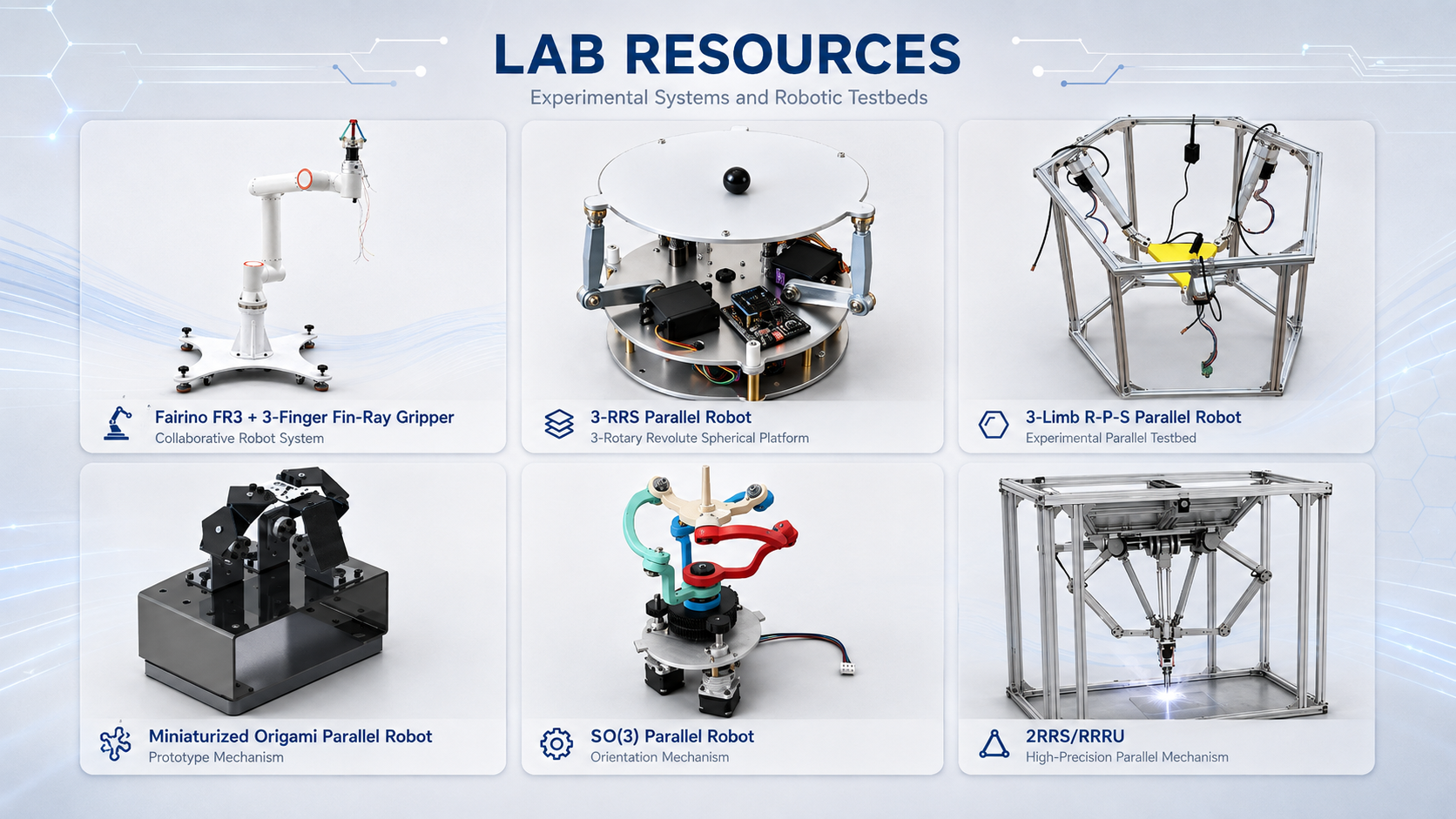
AIRLab Hassen experimental robotic testbeds
Robotic platforms and modular testbeds used for mechanism, control, manipulation and embodied-intelligence experiments.
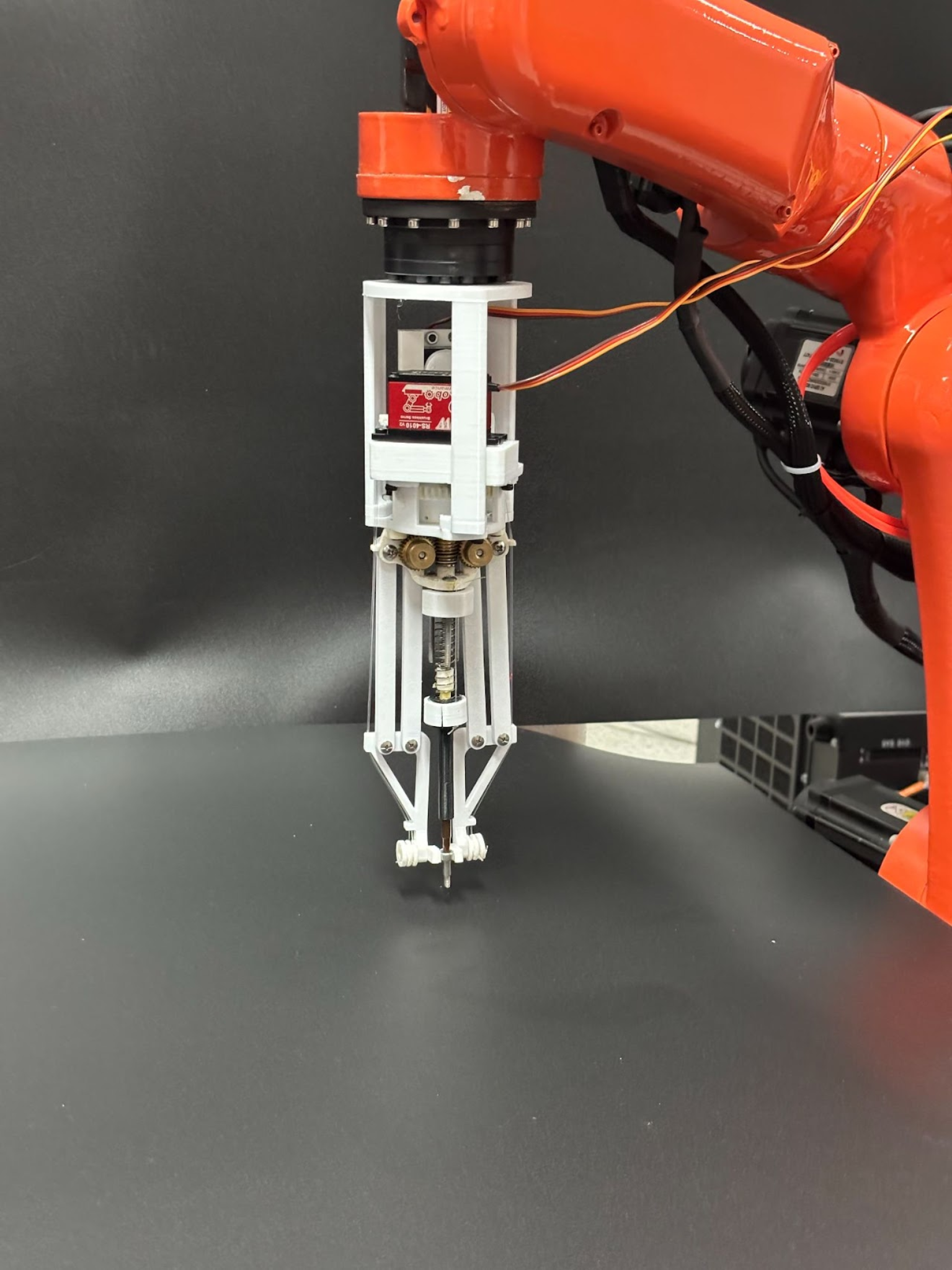
Fairino FR3 + Fin-Ray gripper Collaborative manipulation, adaptive grasping, assembly and human-safe experimental work.
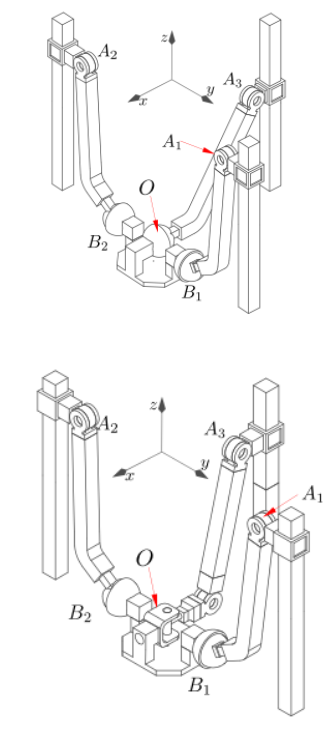
3-RRS parallel robot Rotational and balancing experiments, constraint modeling, orientation control and RL-assisted cooperative manipulation.
3-limb R-P-S testbed Parallel mechanism experiments for lower-DoF motion, constraint analysis and architecture studies.
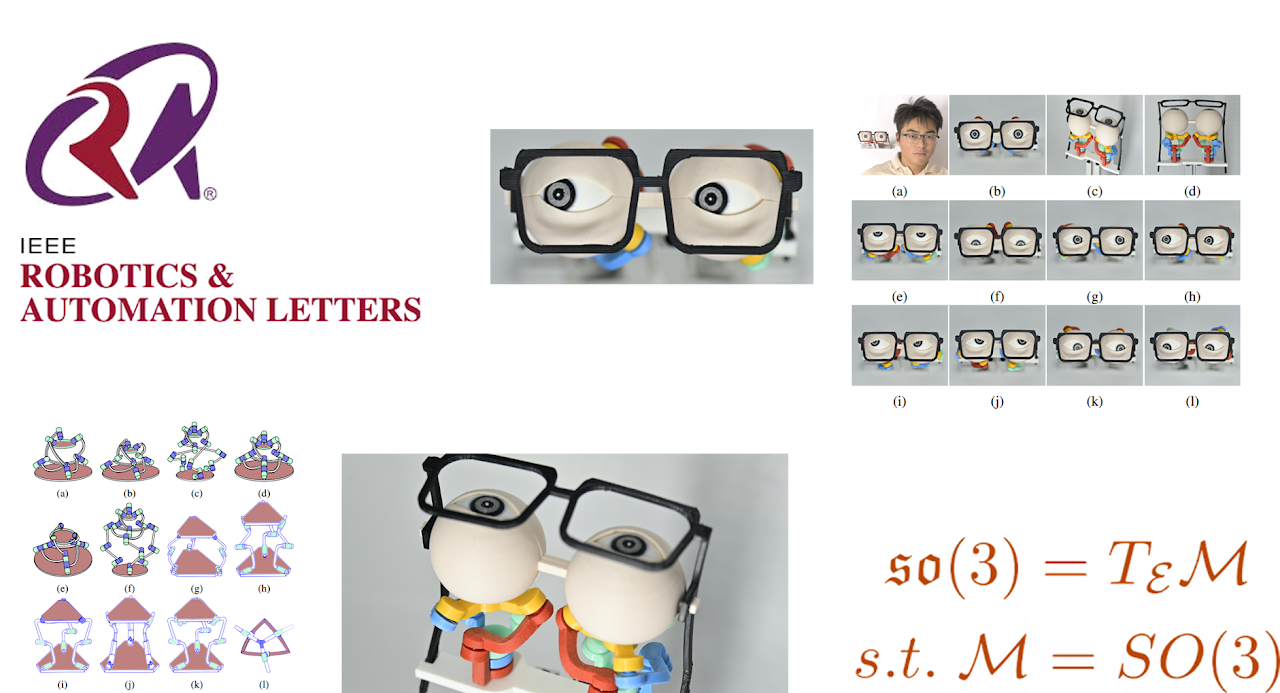
SO(3) parallel robot Orientation mechanism for rotational workspace, dexterity and humanoid-eye-related studies.
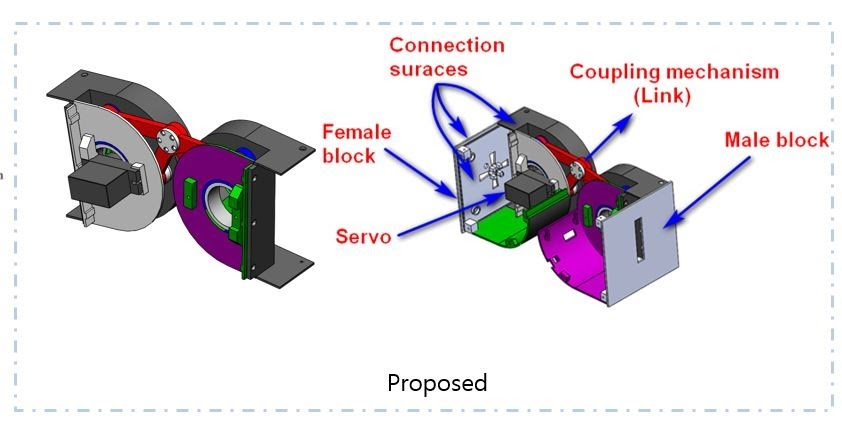
Miniaturized origami parallel robot Compact mechanism platform for foldable robotics, precision motion and intelligent model compensation.
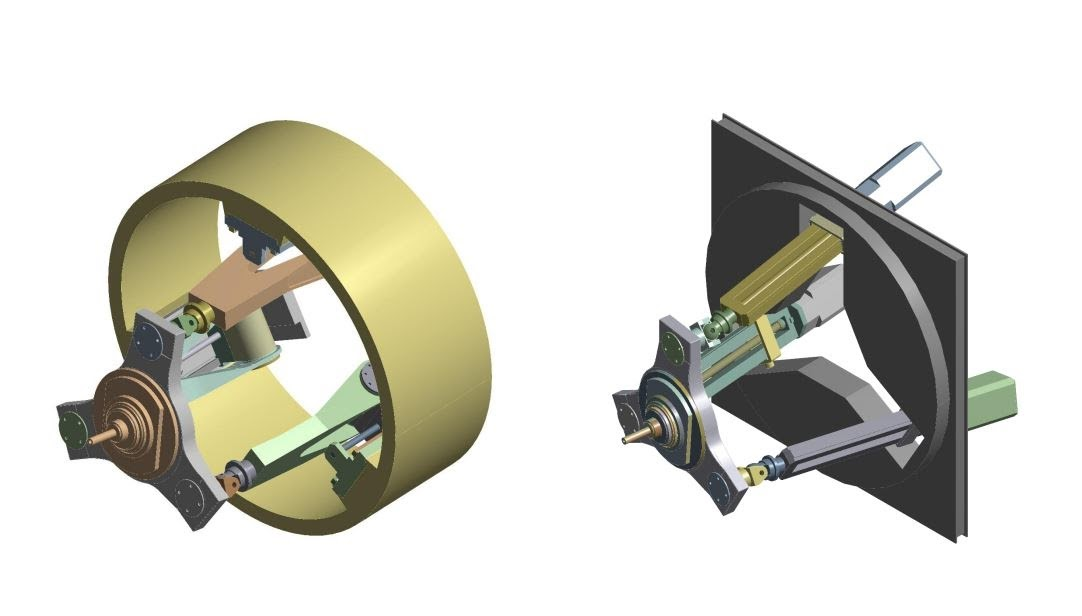
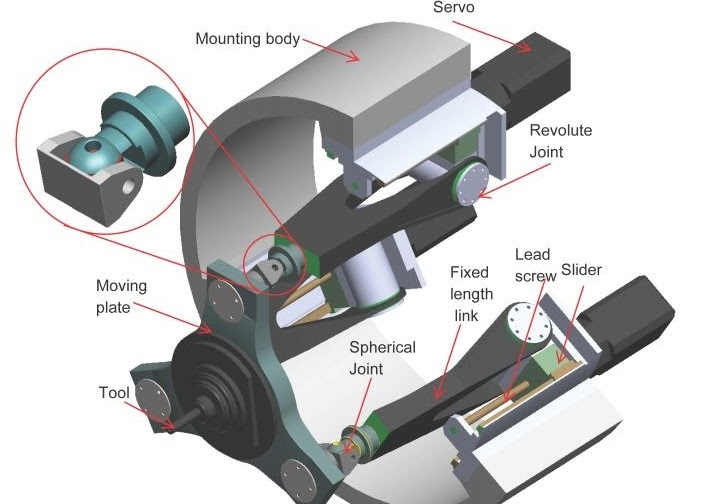
2RRS/RRRU platform Parallel-robot research platform for mechanism development, kinematic experimentation and high-precision motion studies.

Research evolution

From classical mechanism analysis to hybrid intelligence

2012–2014
Screw-theoretic PKM modeling

Dynamic formulation, Jacobian analysis, stiffness modeling and acceleration analysis of lower-DoF parallel mechanisms.

2020–2021
Parasitic motion and constraint-embedded analysis

Analytical coupling relations, structural constraints, 3RPS/3PRS concomitant motion and constraint-embedded Jacobian methods.

2023
Dimensionally homogeneous optimization

Workspace optimization and performance evaluation using dimensionally homogeneous, constraint-consistent Jacobian formulations.

2024–2025
Mechanism intelligence and architectural expansion

Origami robots, underactuated grasping, SO(3) parallel robots, deep neural augmentation, bio-inspired actuation and Lie-group-based mechanism synthesis.

2025–2026
Quantum and learning-enhanced robotics

Quantum-native manipulator optimization, quantum robotics review, industrial Bayesian estimation and reinforcement-learning-based cooperative parallel robots.

Current and future directions

Where the research is moving

Lie-Group Robot Synthesis More systematic architecture generation for parallel and reconfigurable robots, including passive and degenerate cases.
Physics-Informed Robotics Learning dynamics, friction, compliance and uncertainty without discarding analytical structure.
Constraint-Aware Reinforcement Learning Embedding kinematic feasibility, workspace boundaries and singularity awareness inside robotic learning policies.
Quantum Robot Optimization Extending hybrid quantum-classical methods to inverse kinematics, architecture optimization, planning and robot coordination.
Dexterous Adaptive Manipulation Underactuation, Fin-Ray-inspired grasping, tactile behavior and intelligent robotic assembly.
Cooperative Parallel Robotics Multi-mechanism systems that combine complementary mobility for precision manipulation and insertion.
Origami & Morphing Systems Compact, reconfigurable and shape-programmable mechanisms for lightweight robotic systems.
Continuum Parallel Robots Merging continuum mechanics with parallel architecture for medical and constrained-space applications.
Hybrid Intelligent Robotics Combining geometric mechanics, machine learning, physical constraints and emerging computation within unified robotic systems.

Implementation

Software, controls, and computational projects

Robot Kinematics

Serial robot kinematics, UR10 modeling, Sprint Z3, A3 Head and parallel robot analysis.

Robot Control

Dynamixel control, servo control, Bluetooth interfaces and experimental mechanism actuation.

GitHub →

Physics-Based Simulation

Rope, snake, cloth, bouncing-ball and physical animation experiments.

Machine Learning

Korean alphabet recognition, deep neural mechanism models, reinforcement learning and robotic estimation.

Human–Computer Interaction

Voice-driven interfaces and interactive robotic / presentation control.

GitHub →

Quantum Robotics

Variational quantum circuits, quantum optimization and hybrid quantum-classical robot computation.

Research direction

Toward structurally intelligent robots

The long-term objective is not simply to build more complicated robots. It is to develop robotic systems whose geometry, mathematical model, mechanism architecture, learning system and computational strategy are designed together.

This means using mathematics to preserve physical meaning, learning to handle uncertainty, optimization to improve performance, and emerging computation to address problems that become difficult as robotic systems grow in dimension and complexity.
\[ \boxed{ \text{Mechanism Science} + \text{Geometric Robotics} + \text{Machine Intelligence} + \text{Quantum Computing} } \]